
Depop - Buy & Sell Clothes
DepopShopping
4.817.73K Reviews
- Version
- 2.416
- Installs
- 10.00M
- Age Rating
- Teen
Screenshots

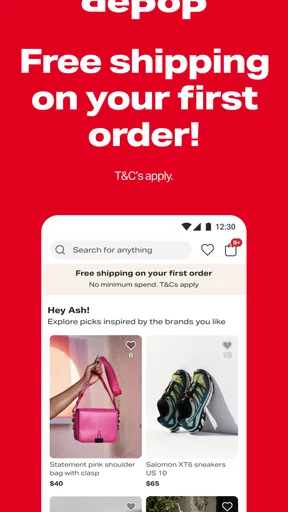
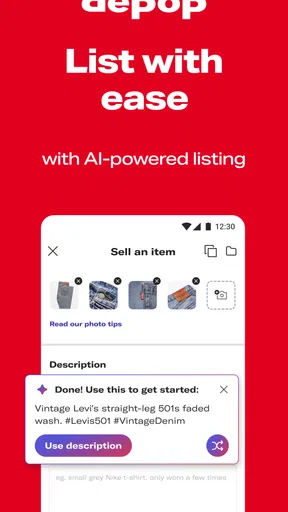
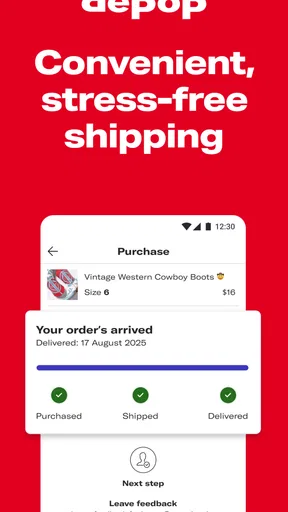
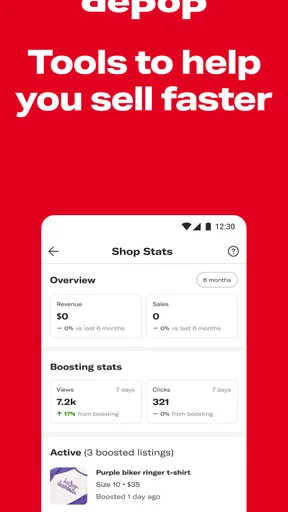


Our Review of Depop - Buy & Sell Clothes
 Analysis by Appyee
I first looked at Depop as the kind of app that can quietly become a shared household project. One person may be clearing a wardrobe, another may be hunting for a vintage jacket, and someone else may simply be helping photograph, package, or compare listings. That makes it more interesting than a basic shopping app: it combines browsing, personal style, selling, and a fair amount of coordination.
My experience is that it works best when everyone involved understands whose account is being used and who is responsible for each purchase or sale. It is free to install, developed by Depop, and focused on buying vintage fashion and selling clothing through an online marketplace. The app is rated Teen, which feels important in a household setting because younger users may need an adult to guide them through communication, transactions, and decisions about meeting or shipping.
How Depop Fits Into a Shared Household
I find shared use works best when the household agrees on a few boundaries before browsing: who owns the account, who can approve a purchase or listing, and who keeps track of the clothing once it is listed. One useful next step is to give each item a simple household label or note, so a promising sale does not turn into a search through everyone’s wardrobe.
One wardrobe, several jobs
A realistic use case is a family preparing for a move or seasonal wardrobe clear-out. One person opens the app and sorts through old clothes, another takes photos in natural light, and a third checks whether an item is worth listing rather than donating. Depop gives that process a visual, style-led home, so the work feels closer to building a small shop than filling out a dry classified advert.
I found that this division of tasks can make selling less tiring. The person who owns the clothes does not have to handle every part alone. Someone with a good eye for outfits can suggest how to present a piece, while someone more organized can keep track of messages and parcels. The important boundary is that the account holder remains clear about what has been agreed, especially when several people are using the same phone or discussing the same item.
For buyers, shared use looks different. A teenager might show a parent a pair of second-hand trainers, or two friends might browse for a themed outfit together. The app encourages discovery, but that also means it is easy to move from one search into unrelated listings. I recommend deciding the budget and the acceptable condition before browsing, because visual appeal can make an imperfect purchase feel more tempting than it should.
Why the visual marketplace feels different
Compared with a general classified service, Depop puts more weight on presentation and personal style. A listing is not just an object with a short description; the photographs, styling, wording, and seller profile all influence whether I trust the item and want to learn more. That is a strength for vintage fashion, unusual pieces, and outfits that benefit from context.
The trade-off is that browsing can be less efficient when I know exactly what I need. A conventional retail store is usually better for selecting a precise size, colour, and delivery option from standardized stock. A general resale marketplace may also be more practical for household tools or everyday items. Depop makes the most sense when the search itself is part of the fun and when individuality matters more than a perfectly predictable catalogue.
Setting up boundaries before anyone lists
On a shared device, I would begin with a simple household agreement: one person owns the account, one person approves listings, and everyone knows where incoming messages will be seen. This is not about making the app complicated. It prevents a common problem in shared use, where one person replies to a buyer, another changes a price, and the account holder is left trying to reconstruct what happened.
I would also keep personal browsing separate from selling tasks where possible. If the same account is used to explore clothes for several people, saved items and conversations can quickly become confusing. A short note outside the app with the item name, intended price, and owner is surprisingly useful. It avoids relying on memory when a wardrobe contains several similar tops or when more than one person wants the same proceeds.
Before posting anything, I suggest agreeing on three practical details: who owns the item, who will package it, and what happens if it does not sell. These questions sound obvious, but they become important when a child is selling outgrown clothes or when siblings are sharing a clear-out. The app can display the marketplace activity, but it cannot settle an argument about ownership inside a household.
A better workflow for selling clothing
My preferred workflow is to prepare everything before opening the listing screen. I separate clean, wearable pieces from items that need repair, check labels and visible wear, and photograph the garment from more than one useful angle. I then write notes about fit, fabric, flaws, and how the item was worn. This takes longer than posting a single flattering photograph, but it reduces avoidable questions later.
A less obvious advantage of this approach is that it helps a household decide what should not be sold. If an item has a difficult-to-explain defect, an uncertain size, or sentimental value, listing it may create more friction than value. Depop is appealing for distinctive clothing, but not every garment deserves the time required to photograph, describe, message about, and package it.
For shared selling, I would create a small staging area at home. Keep listed items together, use a simple label for each one, and do not promise an item that has already been given away or worn again. This is especially useful when several people are contributing clothes. A neat physical system matters because the marketplace only shows the digital side of the transaction.
Coordinating buyers and sellers without confusion
Communication is one of the parts I would treat most carefully. A household should decide who checks messages and when. If a young person is the main seller, an adult can help review unusual requests or questions before a response is sent. That does not remove the young seller’s involvement; it adds a second pair of eyes when money, addresses, or pressure from another user enters the conversation.
I would avoid making promises in a hurry. Before agreeing to anything, check that the item is still available, the description is accurate, and the household is ready to complete the next step. A quick reply can feel polite, but a clear reply is more useful. This is particularly important when a shared phone receives notifications and several people assume someone else has already handled them.
Another practical tip is to separate the emotional decision from the logistical one. A buyer may be excited about a rare-looking piece, while the person handling the household budget is thinking about total cost and delivery. Discussing those points before committing makes the experience calmer. In my view, Depop is at its best when it supports a considered style choice rather than an impulsive group purchase.
Age, trust, and sensible supervision
The Teen content rating should shape how families approach the app. It does not mean every teenager will need the same level of help, but it does mean I would not treat shared access as completely hands-off. A parent or guardian should talk through what personal information is appropriate to share, how to react to pressure, and why an unusually attractive deal still deserves careful checking.
Trust should be built from the listing details and the conversation, not from photographs alone. I look for clear images, a description that acknowledges wear, and answers that stay consistent. If a seller avoids reasonable questions or pushes for a rushed decision, I would step away. The same principle applies when selling: honest descriptions protect the buyer and reduce the chance of disputes or disappointment.
For younger household members, I would keep an adult involved in decisions involving payment, shipping, or any proposed in-person arrangement. The app can be a useful way to learn about pricing, presentation, and responsible reuse, but those lessons are more valuable when an adult explains the risks rather than simply taking over the account.
What the app does well for clothing enthusiasts
The strongest part of Depop is its sense of discovery. It suits people who enjoy combining pieces, finding older styles, and giving clothing another life. I can imagine using it to search for one distinctive item rather than rebuilding an entire wardrobe from standard retail stock. That makes it particularly appealing to students, vintage fans, and anyone who prefers fashion with a story.
It also gives sellers a chance to learn useful skills. Photographing clothing teaches attention to light and detail. Writing a listing teaches concise communication. Managing a sale teaches patience and organization. In a household, these tasks can become a small practical project instead of an isolated online chore.
The app has also reached a substantial audience, with over ten million installs and an average rating of 4.8 from around 137 thousand ratings. Those figures suggest that it is not a niche experiment, but they do not remove the need to judge each individual listing carefully. A busy marketplace contains more choice, not an automatic guarantee that every item or interaction will suit me.
Where the experience can become frustrating
The main limitation is inconsistency. Second-hand clothing varies in condition, sizing, photography, and description quality. A label may say one size while the actual fit feels quite different, especially with older garments. I would ask for measurements when fit matters and treat vague descriptions as a reason to pause rather than a reason to gamble.
There is also more work involved than buying from a normal shop. I may need to compare several listings, ask questions, wait for a reply, and think about whether the seller’s presentation matches the item. That is part of the appeal for some users, but it is a poor fit for anyone who wants a fast, standardized checkout with simple returns and uniform product information.
For sellers, the hidden cost is time. Taking good photographs, answering questions, finding the item later, and preparing it for dispatch can outweigh the value of a low-priced garment. I would bundle the clear-out into a manageable number of worthwhile pieces rather than listing every old item. The app rewards care, but care is still labour.
Version, access, and everyday expectations
The current version is 2.405 and requires at least OS 10, so I would check the household device before planning a shared selling project. That matters when an older phone is the only available camera or when a family member expects to use a tablet that has not been updated. A compatible device is only the starting point, though; a good selling experience also depends on reliable photography, storage for listed items, and someone willing to follow through.
Because the app is free, it is easy to install for a trial without making an immediate financial commitment to the software itself. The real household cost is attention: photographing, researching, communicating, and completing transactions. I think that is a fair exchange when the clothing is distinctive or valuable enough to justify the effort, but less attractive for ordinary basics that could be passed on locally with much less administration.
Who should use it, and who should choose something else
I would recommend Depop to someone who enjoys vintage fashion, wants to sell selected clothing, or is happy to browse until an unusual piece appears. It is also a good fit for a household that can divide responsibilities clearly and treat the account as a shared project with one accountable owner.
I would be more cautious for a person who needs a specific garment by a fixed date, dislikes negotiating, or wants dependable sizing and stock. In those cases, a conventional clothing retailer is usually easier. A broad local marketplace may be better for quick, nearby handovers, while a donation service may be the better choice when the goal is simply to clear space without managing individual sales.
I would also skip it for a household that cannot agree on who handles messages and money. Shared access without clear boundaries tends to create more confusion than convenience. The app itself is not a substitute for family rules, and no amount of appealing fashion discovery fixes an item that nobody can locate after it sells.
My household verdict
After looking at Depop through the lens of shared use, I see it as a lively clothing marketplace that works best with a little preparation. Its free access, strong user response, and large installed audience make it easy to try, while the Teen rating is a useful reminder that younger users should have sensible guidance around trust and transactions.
My recommendation is to start small: choose a few well-described items, assign one account owner, keep the physical clothes organized, and agree on how decisions will be made. For buying, set a budget and check fit details before becoming attached to a photograph. For selling, be honest about condition and make sure the person listing the item can actually find and send it.
The app is most rewarding when the household treats it as a coordinated fashion project, not an unattended communal inbox. I like it for distinctive clothing and thoughtful resale, but I would choose a more standardized shopping option when speed, certainty, or simple returns matter more than discovery. That balance is what makes Depop worth recommending to the right user rather than to everyone.
Privacy and Permissions
See what permissions an app requests and how it handles your data.
- Identity
- find accounts on the device
- Contacts
- find accounts on the device, read your contacts
- Location
- approximate location (network-based), precise location (GPS and network-based)
- Phone
- read phone status and identity
- Photos/Media/Files
- read the contents of your USB storage, modify or delete the contents of your USB storage
- Storage
- read the contents of your USB storage, modify or delete the contents of your USB storage
- Camera
- take pictures and videos
- Microphone
- record audio
- Wi-Fi connection information
- view Wi-Fi connections
- Device ID & call information
- read phone status and identity
- Other
- view network connections, create accounts and set passwords, full network access, control Near Field Communication, run at startup, control vibration, prevent device from sleeping, toggle sync on and off
Verdict
Strengths of Depop - Buy & Sell Clothes
- Strong community focus makes discovering unique styles enjoyable.
- In-app messaging helps buyers clarify details before purchasing.
- Seller profiles and ratings provide useful trust signals.
- Easy to follow favorite sellers and track new listings.
- Great option for finding vintage and hard-to-find fashion pieces.
Limitations of Depop - Buy & Sell Clothes
- Item quality and authenticity can vary between individual sellers.
- Search results may include many similar or irrelevant listings.
- Shipping costs can make inexpensive items less attractive.
- Some sellers may respond slowly or take time to dispatch orders.
- Returns and refunds can depend heavily on seller policies.
Similar Picks in This Category
View All
SHEIN-Shopping Online
Roadget Business PTE. LTD.4.8

Amazon Shopping
Amazon Mobile LLC4.4


Mercado Libre: Compras online
Mercado Libre4.8

Wish: Shop and Save
Wish US Holdings LLC4.7

Alibaba.com - B2B marketplace
Alibaba Mobile4.4
Frequently Asked Questions
What is Depop, and how does buying and selling work?
Depop is a fashion marketplace where users can discover, buy, and sell new, vintage, second-hand, and handmade clothing and accessories. Sellers create listings with photos, descriptions, sizes, conditions, and prices, while buyers browse through personalized feeds or search filters. Transactions, messaging, and order updates are handled through the app, making it feel similar to a social shopping platform.
Is Depop safe to use for buying and selling clothes?
Depop includes features designed to make transactions safer, such as in-app messaging, payment processing, order tracking, and buyer or seller reviews. However, users should still remain cautious. Keep communication and payments inside Depop, inspect listing details carefully, check seller feedback, and avoid requests to use external payment services. Protection may depend on the transaction, location, and compliance with Depop’s policies.
What payment methods are available on Depop?
Payment options can vary depending on your country and the current version of Depop, but purchases are generally completed through the app using supported card payments, digital wallets, or other locally available methods. Sellers should use Depop’s official checkout system rather than accepting direct transfers. Before confirming an order, review the displayed total, including item price, shipping, taxes, and any applicable fees.
How do shipping, returns, and refunds work on Depop?
Shipping arrangements depend on the seller, destination, and listing details. Some sellers offer integrated shipping labels, while others provide their own shipping method and tracking information. Buyers should read the shipping description before purchasing and confirm the seller’s return policy. If an item does not arrive, is significantly different from its description, or has another serious issue, a dispute or refund request may be available under Depop’s policies.
What should I check before listing clothes on Depop?
Before listing an item, take clear photos in good lighting and accurately describe its brand, size, measurements, condition, flaws, color, and authenticity. Mention whether it has been washed or altered, and use relevant search terms without exaggerating the item’s qualities. Set a realistic price after comparing similar listings. Also review Depop’s prohibited-item rules, seller fees, shipping requirements, and local tax obligations before publishing the listing.
